Biocracked
←

#whole foods

1 article
Approach: macro science (with a conceptual split). Palette: D, bold color field.

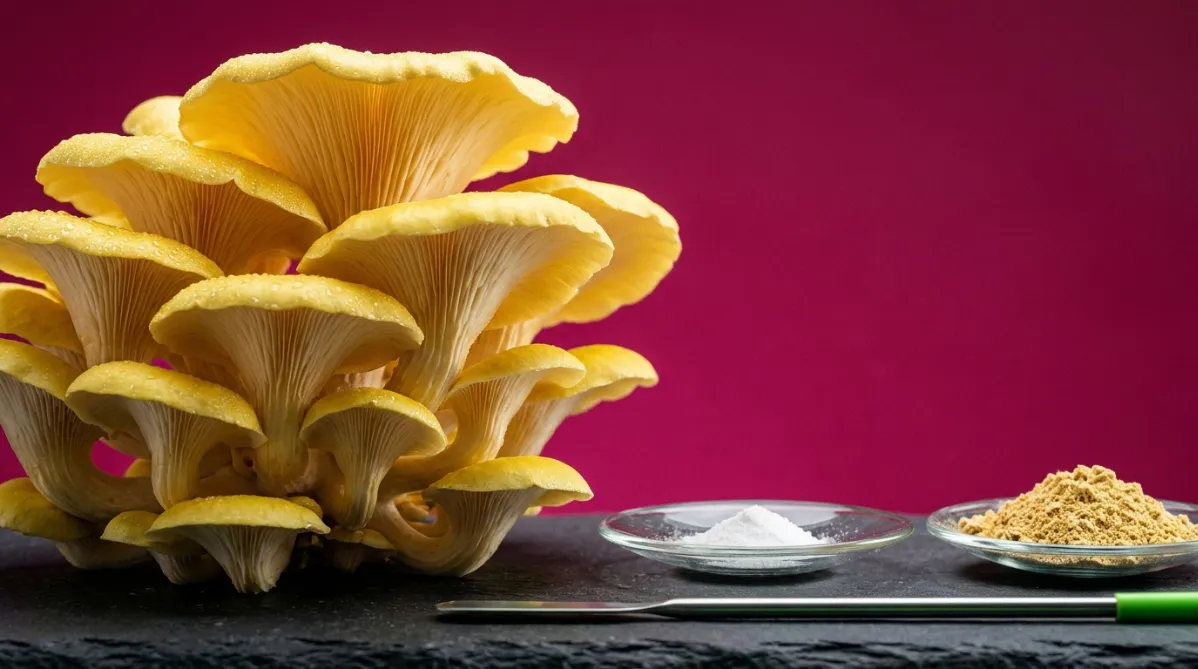
Extreme close-up photograph of a cluster of golden oyster mushrooms (Tamogitake), their ruffled, canary-yellow caps and fine gill structures sharply detailed, shot at a slight low three-quarter angle against a saturated magenta backdrop. In the foreground, a small glass watch dish holds a pinch of fine white crystalline powder, the isolated compound, sitting plain and inert beside a heap of fawn-yellow dried mushroom powder in a second dish. Soft directional studio light from the upper left gives the caps a translucent glow and creates crisp, short shadows. Tiny dew-like droplets cling to the gills. A single thin electric green stem of a lab spatula glints at the edge of the frame. Mood: curious, vivid, quietly skeptical, with the mushroom clearly outshining the isolate. No text or labels.
research

这种蘑菇降低了啮齿动物的肝脂——其明星成分却未见效

BY NOVA CHEN ·

麝香草酸被视为蘑菇健康光环的功臣,但最新的啮齿动物实验让这一说法变得复杂。喂食金针菇(Tamogitake)粉的老鼠和肥胖小鼠肝脏中的胆固醇和甘油三酯都有所下降,而单独给药的麝香草酸却没有此效果。蘑菇还能略微提升粪便中胆固醇和游离脂肪酸的排泄,纯化的麝香草酸则没有这种趋势。作者因此认为,这些益处不能仅归因于麝香草酸本身。需要提醒的是,这仅是动物实验,蘑菇粉在动物饮食中占比高达5%,并不能直接等同于人类的日常膳食。

This page is available in